Wednesday, February 23, 2011

Class 16- February 23, 2011

  In class today, we are suppose to be doing stations. We started the class with Dr. Smirnova's husband Micheal Edelstein virtually coming to our class. Professor Edelstein is a professor at Ramapo College in Mahwah, NJ. He is an environmentalist. Then Dr. Smirnova tried to talk to her son Boris Smirnov who is a web analyst for Hertz. 


  The microteaching of the day was from Amanda G. and Alica Conroy. There microteaching was on heat. On the board was written this chart that is listed below. The answers below are about heat from my classmates. 

Know

Want to know
How will you learn
·        it comes in waves

·        where does heat come from

·        experiments

  • form of energy

  • what is heat used for

  • book

  • heat rises

  • why does heat rise

  • research online

  • heat comes from sun


  • observing


  • interview a scientist


  • Google it


  We  (the class) also saw a video about a balloon in cold and hot water. 


   After the microteaching,Dr. Smirnova explained about the Google talk and the chat that we can have on Google Docs. Katharine asked about having a conversation on powerpoint when pulling up the chart is only when viewing the powerpoint.  Dr. Smirnova asked if any of the groups were ready to go today.  Dr. Smirnova clicked on one of the groups project under Google Docs. Dr. Smirnova opened up groups 6: Pink Flamingos station and Amanda B said that they were not done. Dr. Smirnova said showed us how Amanda is viewing the document and how to have a chart on the side. Group 5 the Bill Nyre group was ready today. Nicole said that Group 3 my group was ready to go today. 


Stations: Group 5: Magic Balloon and Group 3: Buoyancy with Boats. 


  Group 3 Experiment: We (Dana, Catharine, me, and Nicole) first had ten minutes to set up and test the experiment before sharing the experiment with one of the other groups in the class. Group 2: Global Warming Crusades and Group 1: MST Manics did our experiment today. It was a learning experience because normally all the 6 groups would be doing each other stations but not all th groups were ready so our group and group 5 could observe and see how our classmates do our experiments. I learned a lot from the experiment. With the first group which was group 2: Global Warming Crusaders, for our experiment we (Nicole, Dana, Catherine, and me) did not have them predict how many pennies their boat would hold before sinking but for the second group: Group1: MST Manics we (Catharine, Nicole, Dana, and me) had the group predict. I also learned to have people measure the boat before putting in the water. So our group decided at the end of class that we (me, Dana, Nicole, and Catharine) are going to update our sheet to include more information based on what we learned from the two groups that did our experiment today. We  (me, Dana, Catharine, and Nicole) are going to include: prediction question, include the name, group name, and date to the sheet because the worksheet I printed did not have that information. So I told the groups for today to put their name, today's date, and the group name. We (Catharine, Dana, Nicole, or me) are also adding CBC to our Google Docs. We (Dana, me, Nicole, and Catharine)  also recycled the aluminum foil to help better the environment and to be green.We (Dana, Nicole, me, and Catharine) started the experiment with beakers filled with water but saw that was not working out so we then decided to use bowls filled with water with the MST Maniacs. When Global Warming Crusaders did the experiment Sandra and Amy used a bowl while Ashley and Joyce used beakers. The beakers also made it harder to get the boats out once the boats sunk and got water everywhere. So the bowls were a better plan can fit two boats in the bowl and not too much water spilled out. We thought for next time and we did do it with MST Maniacs, we (Nicole, Catharine, Dana, and me) told the participants to not count the last penny put in that made the boat sink.


  While the experiments were going on the other groups not doing the experiment or station had computers and were working on their stations for Friday. 


The importance of using a KWH or KWL chart is as follows. It is a good chart to use to assess what children know, want to know and want to learn on a certain topic. As a teacher I would use this chart at the beginning of the lesson. The students will do the chart on their own first for five minutes and then after the five minutes I will ask the students in my class to give me some of their response that the students wrote in their chart for each column so I the teacher can write it on the board. 


Monday, February 21, 2011

Nature Observation- February 21, 2011

  It snowed this morning from midnight and continued throughout the morning while we were sleeping. Now there is now snow on the tennis courts covering the spots that just started to melt so that we could see some blue paint. Now there is snow once again covering that blue paint. The tennis courts have snow on them and it will take much longer to melt because we are not suppose to get any warm weather this week like we got last week. 


Class 15 - February 21, 2011 - President's Day

   Today's class will be held on the computer in an online session from the program called WebEx. The session will start at 11:15 a. m. The same time that class starts. The session information is about Science Circus Design. The goal of this session is to work on stations project for Wednesday February 23, 2011 class. 


   It is important to keep track of all the assignments for each week.

  We were suppose to work in our teams and design stations that are suppose to last 10 to 15 minutes. Station to Station: Science Circus. Chapter 6 of Science Stories book main concept was on state of matter. It is important to seen invitation to Google docs to Dr.Smirnova so that she can help your group with the making of the station and to also make the stations challenging. Wednesday we are going to go through the different stations. Probably get through three or four stations on Wednesday February 23, 2011. The stations need to include: standards, key ideas, goals, and objectives. There is a link is on Module under Week 6 under Monday under Science Circus. 


   Dr. Smirnova asked if there were any questions regarding Week 6, stations, and state of matter. Nicole Setter asked the question: Will you buy things or do we need to buy supplies for our stations? For my group which Nicole is apart of we need tinfoil. Dr. Smirnova said to send her an email and she would try with the science department and then she said that you should explore the dollar store. Clarrisa then asked a question about what do we need for Wednesday. Dr. Smirnova said that we need the material and to set up in classroom. Dr. Smirnova went on to talk about Wednesday. 


  On Wednesday, each group will start at their own station. The station will take ten minutes to set up. Then you will spend ten minutes at your station and then when ten minutes is up Dr. Smirnova said she ring a bell or play music to say to go to the next station. Order of rotation: Table 1 to Table 2, Table 2 to Table 3, Table 3 to Table 4, Table 4 to Table 5, Table 5 to Table 6, Table 6 to Table 1. 


   For Wednesday, Groups 1 to 4 should be ready with their station. For the station there should clearly state: procedures, objectives, description of station. You should post on a discussion forum your station so your peers can give you feedback. You can put your station and the task in Microsoft word. 


For station should include: task, steps, procedure, what problem have to solve, and look at what standards to address. It is also good to have a print out of the worksheet. 


As a teacher I would put students into groups of four and have the students do different stations. Science Circus is a great way to get students more involved in hands-on activities away from teacher instruction. I would come up with different stations for my students. One station would be the Phases of the moon with using marshmallows. Another station would be the Buoyancy Boats with using aluminum, water, and pennies. A third station would be Falling for Gravity which has to do with the marbles, binder, and ruler. A fourth station would be the Magic Balloon where the students put the balloon on a bottle and first put in cold water and then in warm. A fifth station would be the Ping Pong ball experiment mentioned in one of my own blog. A sixth station would be on ecosystems of the desert and rainforest. These six stations would interest my students keep them engaged. The students would have a fun time doing these stations and answering the questions at each station. Science Circus is a great way to get students to learn the knowledge on their own.  Science Circus will only be done twice a year in my classroom as something special for the students to do instead of listening to me lecture or verbally give the students information.   

Sunday, February 20, 2011

Poland Spring Water Fact

Smaller Cap = Less Plastic 


Did you notice this bottle has a shorter cap? This is part of our ongoing effort to reduce our impact on the environment. This bottle and cap contain an average of 20% less plastic than our original 0.5 L Eco- Shape bottle and cap. 


This fact is important to know. It is a fun fact to know and it is interesting to know that using less plastic can help reduce our impact on the environment.As a teacher, I would use this fact to talk about how we can reduce our impact on the environment and help the environment be better.  As a teacher, I would also teach my students about recycling and what should be recycled. I would also tell my students not to throw out their water bottle but take their water bottles back to get a deposit, better the environment, and make some money.  As a future teacher, I would teach this fact to my students. Then when the test came I would use this fact as a bonus question.  It is a cool fact to know how to help reduce harm and how to reduce impact to the environment. 


This video talks about how it is not that easy being a bottled water CEO these days. Kim Jeffery top executive in a water company called Nestle Waters that produces bottle water.  It owns five of the top ten brands including Poland Spring, Deer Park, and Arrowhead. Its product has become controversy. The video shows how the water  bottle can one day be counted as a success and then the video shows how the water bottles are affecting the environment. The video goes on to show the raw materials needed for plastic bottles.  This video is important to hear to know how the plastic bottles are affecting the environment. This video is important to show how the environment is affected by plastic bottles. I feel that this video would be a good way to help teach students about the environment. It is important for students to learn about what is happening to the environment that the students live in. It is good that this video has pictures to show what is happening to the environment. This video would be good to show at the beginning of my lesson before introducing the topic of recycling which is important to help improve the environment and to have less of an impact on the environment. 

Saturday, February 19, 2011

Nature Observation- February 19, 2011

    It was nice to see that the snow has started to melt around campus thanks to the three nice warm days we had on Wednesday February 16, 2011, Thursday February 17, 2011, and Friday February 18, 2011. It has started to melt the snow that was covering the tennis courts. if you look at the tennis courts you can start to see some of  the blue paint on the courts. I know that the court in the picture above has a green paint  but it was the only picture I could find and I don't have a camera to take a picture of the actual courts on the Mount campus. 

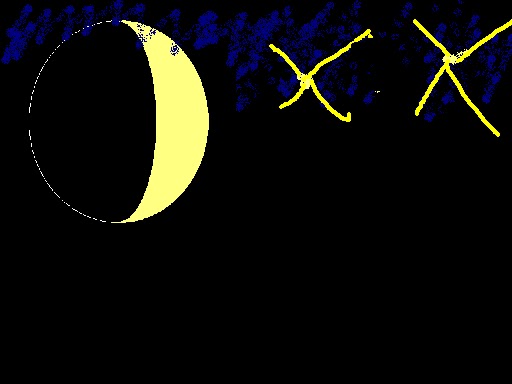
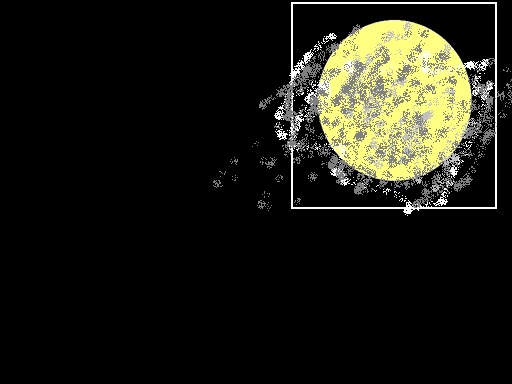
Moon Observations from February 4th to February 18th - picturess


These are the images of the sky that I have seen from February 4th to February 18th. I can definitely see a change in the moon's size and how much light the moon gives off and if the moon is visible to see. It is cool to see the moon change phases.

Moon Observations - text from February 4th to February 18th


Moon Observations: for 6 Weeks

Moon Observation:

Date:  February 4, 2011

Time: 10:02 p.m.  to  10:10 p. m .

Description:
·         Seemed to be no moon in the sky
·         Sky is somewhat dark
·         Sky was dimly lit with stars
·         Sky was a dark blueish grey
·         The stars were small but can be seen with the eye
·         The stars were dimly lit and can be seen with the eye not very bright
·         * LI home (Albertson , NY)
·         Phase of moon: new moon

Moon Observation:

Date:  February 5, 2011

Time :  10:30 p.m.  to  10:34 p.m.

Description:
·         No moon in the sky
·         No stars in the sky
·         Sky: black with white smoke gives it a greyish appearance
·         Appears foggy and misty
·         Seemed dark because no stars are out
·         * On Long Island (at home)
·         Phase of moon: new moon


Moon Observation:

Date:  February 6, 2011

Time:   10:17 p.m. to 10: 22 p.m.

Description:
·         Grey sky
·          Star: be able to be seen with eye not super bright
·         No moon in the sky
·         * On Long Island (home)
·         Phase of the moon: new moon


Moon Observation:

Date:  February 7, 2011

Time:  10:30 p. m. to 10: 38 p. m.

Description:
·         Did not see the moon
·         No stars in the sky
·         Raining and cold
·         Sky is dark grey
·         Had a few clouds but could not see
·         * in Newburgh, NY
·         Phase of moon: new moon


Moon Observation:

Date:  February 8, 2011

Time:  7:15 p.m. to 7: 22 p.m.

Description:
·         Saw the moon
·         Bright yellow
·         Stars: a little in the sky some were bright
·         Sky was dark nay blue to blackish in color
·         Moon is high in sky
·         * in Newburgh, NY
·         Phase of moon: waxing crescent

Moon Observation:

Date:  February 9, 2011

Time:  8: 05 p. m. to  8: 10 p. m.

Description:
·          No stars in the sky
·         Sky is very dark
·         Moon was covered with a whitish cloud material
·         * in Newburgh, NY
·         Phase of moon: waxing crescent


Moon Observation:

Date:  February 10, 2011

Time:  9:33 p. m. to 9: 37 p.m.

Description:
·         Couple of stars in the sky
·         Moon is about half
·         Sky is really dark
·         * in Newburgh, NY
·         Phase of moon is between waxing crescent and 1st quarter


Moon Observation:

Date:   February 11, 2011

Time:  7:15 p. m. to 7: 20 p. m.

Description:
·         Dark blueish grEy sky
·         Some stars are bright and some stars are not so bright
·         Some stars can be seen
·         Bright moon
·         * home on Long Island, NY
·         Phase of the moon: first quarter


Moon Observation:

Date:  February 12, 2011

Time:   9:55 p. m. to 9:57 p. m.

Description:
·         Dark blueish grey sky
·         Dim stars some brighter than others
·         Moon brightly lit
·         * home on Long Island (Albertson, NY)
·         Phase of the moon: waxing  gibbous


Moon Observation:

Date:  February 13, 2011

Time:  6:45 p.m. to 7: 00 p. m.

Description:
·         No stars visible in sky
·          A cloud of white fog around the moon
·         * in Newburgh, NY
·         Phase of the moon: waxing  gibbous

Moon Observation:

Date:  February 14, 2011

Time:  9:04 p.m. to 9: 10 p. m.

Description:
·         Dark blue with some black in sky
·         Stars out but can’t see them well
·         Bright moon
·         * in Newburgh, NY
·         Phase of the moon:  a little more than waxing gibbous

Moon Observation:

Date:  February 15, 2011

Time:  7:45 p.m. to 7: 50 p. m.

Description:
·         Dark blue sky
·         A couple of stars out
·         Saw Orion belt in the sky by Hudson Hall
·         * in Newburgh, NY
·         Phase of moon: almost a full moon a little more than waxing gibbous


Moon Observation:

Date:  February 16, 2011

Time:  6:30 p.m. to 6:35 p.m.

Description:
·         Moon was just coming up
·         Dark blue sky
·         Stars not very bright
·         Saw no stars
·         * in Newburgh, NY
·         Phase of the moon: Moon is almost a full moon just a little less


Moon Observation:

Date:  February 17, 2011

Time:   6:45 p. m. to 6:50 p.m.

Description:
·         Dark blue sky
·         White/ grey fog around the moon
·         Moon is bright
·         A couple of stars spread out in sky and not very bright and hard to see
·         Moon has a yellow color or gives off a yellow color
·         * in Newburgh, NY
·         Phase of moon: full moon


Moon Observation:

Date:  February 18, 2011

Time:  8:45 p.m. to 8:50 p.m.

Description:
·         @ 8: 50 p. m. the moon went behind a cloud of white grey fog and appeared black
·         Dark blue sky
·         No stars
·         Moon was visible between 8:45 p. m. to 8:49 p. m.
·         The moon was bright yellow
·         * in Newburgh, NY
·         Phase of the moon: full moon


        This is just the start of my moon journal. I have already seen some of the phase changes of the moon like a new moon, first quarter, waning gibbous, waxing crescent, and  full moon. That is pretty cool. I can't wait to see more of the phases of the moon.